What to consider
A practical guide that supports better decisions.
Compare the practical details that shape a cleaner estimate: material fit, access, gates, privacy needs, maintenance, and local property conditions.
What a sound barrier fence can do
A solid fence can interrupt the direct path between a noise source and a yard. That can reduce the harshness or perceived level of some traffic, equipment, and neighborhood sounds. Results vary by frequency, distance, grade, surrounding surfaces, and openings. A fence changes outdoor sound conditions; it does not create a soundproof room.
Mass and continuity matter
Open aluminum, ornamental iron, and chain link provide little sound blocking because air and sound pass through. A heavier privacy system is more useful when sound reduction is a goal. Continuous panels, tight component fit, and careful transitions help. Gaps under panels, open gates, and breaks around structures can reduce the benefit.
Height and line of sight
A useful barrier generally needs to block the direct line between the source and the listening area. Cars on a lower road, elevated equipment, second-story windows, and steep grade changes all create different geometry. The tallest permitted fence is not automatically the best answer, but height and placement should be discussed together.
Place the barrier strategically
A barrier is often more effective when it is reasonably close to the source or the area being protected, but property lines, setbacks, access, drainage, and appearance limit placement. Long side-yard gaps, driveway openings, and gates may become weak points. Review the complete path instead of focusing on one panel sample.
Understand reflections and surroundings
Hard walls, homes, pavement, retaining walls, and neighboring structures can reflect sound. Wind and atmospheric conditions also change what people hear outdoors. A fence may reduce direct noise while reflected or elevated sound remains noticeable. Honest planning sets a reduction goal rather than promising silence.
Compare SimTek with other privacy options
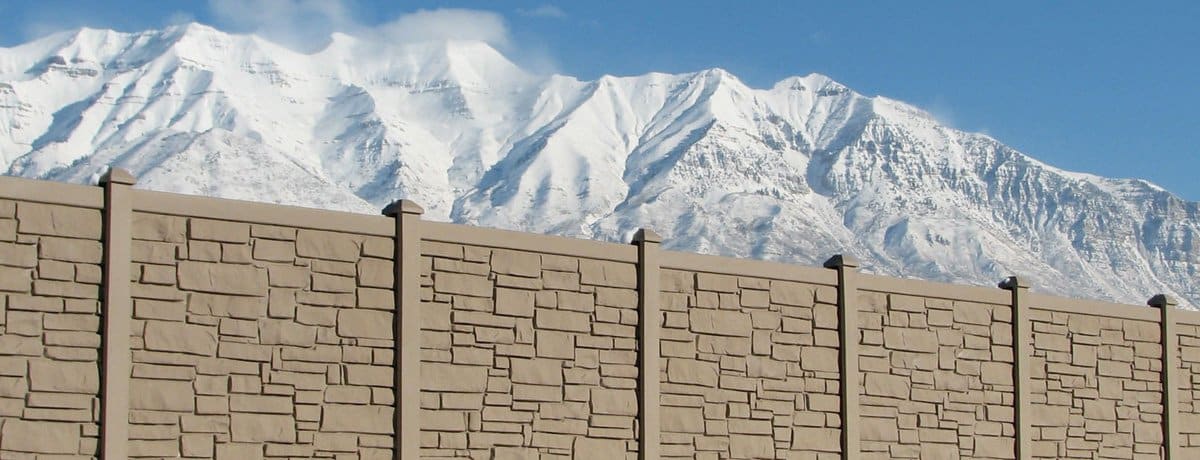
SimTek combines molded texture, full privacy, and more panel mass than many lightweight systems. Vinyl privacy may still be a good fit where budget, color, maintenance, or availability matter more. Masonry can provide more mass but involves a different contractor, foundation, cost, and permitting path. Compare the full installed system.
Measure the site before promising results
Document the source location, traffic direction, grade, desired quiet area, existing barriers, gates, and permitted height. Photos and a site visit help reveal whether the fence can block the direct path. For critical noise problems, an acoustical professional can evaluate the property more precisely than a fence estimate.
Set a realistic estimate scope
The written proposal should identify the product, height, length, gate locations, bottom clearances, grade handling, and connections to structures or existing fence. Ask what gaps will remain and how the fence steps on slopes. Those details affect privacy, appearance, and potential sound reduction.